< Volver HAPLOLOBUS (Haplolobus floribundus) Vista Imprimible
HAPLOLOBUS (Haplolobus floribundus)
Nombre comercial
Haplolobus
Nombre científico (con autor)
Haplolobus floribundus (K. Schumann) H.J. Lam
Familia
BURSERACEAE
Nombres Comunes
Ode mayoko (Indonesia); Lian (Indonesia); Enei (Indonesia)
Nombres científicos sinónimos (con autores)
Haplolobus moluccanus H.J Lam; Haplolobus leeifolius (Lauterb.) H.J Lam; Haplolobus celebicus H.J. Lam
DESCRIPCIÓN DEL ÁRBOL
Descripción botánica
It is a dioecious, small to medium-sized tree up to 30 m tall. The bole is straight, branchless for up to 20 m, up to 60 cm in diameter, sometimes with small buttresses.
Hábitat natural
Haplolobus floribundus is found mostly scattered in primary, rarely secondary rainforest, from the sea level up to 1,980 m of altitude. It is most common on hills and ridges, and it generally occurs on well drained, alluvial or clayey soils.
Usos No-maderables
H. floribundus wood is reported to have an exceptional wide range of density variation, from 0.34 up to 1.24 g/cm3 in air dried condition.
IDENTIFICACIÓN DE LA MADERA
Descripción anatómica de la madera
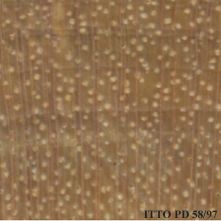
Wood diffuse porous. Tangential diameter of vessel lumina 100 micras or less (very small). Colored deposits in heartwood vessels. Vessels per mm2 more than 20 (very abundant). Simple perforation plates. Vessel-ray pits similar to intervessel pits in size and s Occasionally apotracheal axial parenchyma diffuse and/or diffuse in aggregates. Paratracheal axial parenchyma scanty and/or vasicentric. Axial parenchyma aliform. Occasionally axial parenchyma confluent. Prismatic crystals in chambered axial parenchyma cells 4 to 10 rays per mm (medium). Body ray cells procumbent with mostly 2 to 4 rows of upright and/or square marginal cells (Kribs-II). Body ray cells procumbent with one row of upright and/or square marginal cells (Kribs-III). Fibers with simple to minutely bordered pits.
Disponibilidad
Status de protección por CITES
Unrestricted
DESCRIPCIÓN GENERAL DE LA MADERA
Color
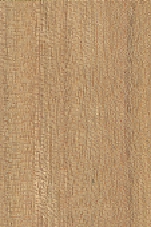
The heartwood varies from pale brown to pink brown. Denser material usually a little darker in color, not clearly demarcated from the sapwood.
Indice de Color (1= Negro, violeta; 7= Amarillo claro, blanco)
5
Grano
This timber usually has straight or wavy grain.
Veta
Texture is usually medium to coarse.
Durabilidad Natural
This species is prone to blue stain, early anti-stain treatment is recommended.
Indice de Durabilidad Natural (1=Muy alta, 7=Muy baja)
6
PROPIEDADES FÍSICAS DE LA MADERA
Densidad Básica (Peso anhidro/Vol. saturado) (g/cm³)
0.52
Densidad seca al aire (Peso y volúmen CH12%) (g/cm³)
0.57
Defectos por secado
Ease of Drying: The timber air dries rather slowly, usually without serious defects. Boards 12.5 mm thick take about 3 months to air dry. Drying Defects: Slight checking and end splitting may occur.
PROPIEDADES QUÍMICAS DE LA MADERA
PROPIEDADES MECÁNICAS DE LA MADERA
Resistencia a flexión (Módulo de ruptura) CH12% (kgf/cm²)
397
Rigidez (Módulo de elasticidad) CH12% (kgf/cm²)
46415
Resistencia a la compresión paralela a la fibra CH12% (kgf/cm²)
428
Resistencia a la compresión perpendicular a la fibra CH12% (kgf/cm²)
76
Cizallamiento radial CH12% (kgf/cm²)
127
Dureza Janka (lados) CH12% (kgf)
567
Dureza Janka (extremos) CH12% (kgf)
567
TRABAJABILIDAD
Corte de chapa rotativa
This species can be used for lamination.
Chapa tranchada
This species can be used for lamination.
Usos Reportados
USOS FINALES (RESUMEN)
HOUSING GENERAL, PLYWOOD AND VENEER
VIVIENDA GENERAL
- 10 - Silica in Timbers
TABLEROS Y CHAPAS
- 25 - Directory of Timber Trade Malaysia
Please Provide Information To View Producer Information