
< Retour GUATAMBú (Balfourodendron riedelianum) Version imprimable
GUATAMBú (Balfourodendron riedelianum)
Nom commercial
Guatambú
Nom scientifique (avec auteur)
Balfourodendron riedelianum (Engl.) Engl.
Famille
RUTACEAE
Noms communs (pays)
Quatamba; Pequia marfim; Pao marfim; Pao liso; Moroti; Marfim; Ivorywood; Ibiranoti; Ibira-nete; Guatambu moroti; Guatambu blanco; Guatambu; Guataia; Gramixinga; Farinha-seca; Piquiá Marfim (Brazil); Pau Liso (Brazil); Guatambu Branco (Brazil); Pau Marfim (Brazil); Ivory Wood
Synonymes du nom scientifique (avec auteurs)
Helietta multiflora Engl.; Esenbeckia riedeliana Engl.
DESCRIPTION DE L'ARBRE
Description botanique
The trees are reported to reach heights of 20 to 30 m, with trunk diameters ranging from 40 to 90 cm. They develop well-formed and cylindrical boles, up to one half of the height of the tree.
Habitat naturel
Balfourodendron riedelianum is a pioneer species, found in clear areas of primary forests or in secondary forests. It is known or inferred that the harvesting of specimens from the wild for international trade has, or may have, a detrimental impact on the
Répartition naturelle
This species is reported to occur in Brazil, in the forests of Minas Gerais, Mato Grosso do Sul, Rio Grande do Sul and also along the Parana basin.
Usages non ligneux
Dermatitis, respiratory effects
IDENTIFICATION DU BOIS
Description anatomique du bois
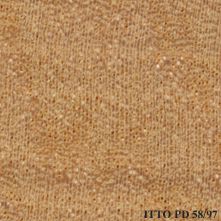
Wood diffuse porous. Occasionally vessels in diagonal and/or radial pattern. Occasionally wood semi-ring porous and/or ring porous. Vessels in radial multiples of 4 or more common. Tangential diameter of vessel lumina 100 micras or less (very small). Vessels p Axial parenchyma in marginal or in seemingly marginal bands. Paratracheal axial parenchyma scanty and/or vasicentric. Prismatic crystals in chambered axial parenchyma cells and/or in fibers. 3 to 4 cells per parenchyma strand. 4 to 10 rays per mm (medium). Rays 1 to 4 seriate. Prismatic crystals in the ray cells. Body ray cells procumbent with mostly 2 to 4 rows of upright and/or square marginal cells (Kribs-II). Fibers with simple to minutely bordered pits.
Disponibilité
Statut CITES
Unrestricted
DESCRIPTION GÉNÉRALE DU BOIS
Odeur
It does not have a peculiar smell, but has a bitter taste.
Teinte
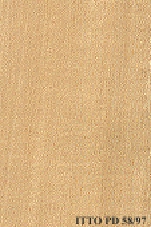
The sapwood is non differentiated, the timber is nearly white to yellow in color, occasionally with dark streaks.
Index de Teinte (1 = Noir, 7 = Jaune clair)
6
Grain
The grain is straight, sometimes interlocked.
Texture
The wood is typically fine to medium in texture.
Luster
This wood is frequently moderate in luster.
Durabilité naturelle
It is rated as moderately durable to non durable, it is susceptible to blue staining fungi.
Index de durabilité naturelle (1 = Très élevée, 7 = Très faible)
6
Résistance à l'imprégnation
The heartwood is reported to be moderately permeable, but the sapwood is treatable.
PROPRIÉTÉS PHYSIQUES DU BOIS
Densité basale ou gravité spécifique (poids anhydre/vol. saturé) (g/cm³)
0.74
Densité sèche à l'air (poids et volume à 12%TH) (g/cm³)
0.84
Retrait tangentiel total (saturé à 0%TH) (%)
9.6
Retrait radial total (saturé à 0%TH) (%)
4.9
Défauts dus au séchage
Ease of Drying: This species is reported to be easy to dry, sometimes end checking can occur. Drying Defects: Slight risk of warping and checking. Casehardening is reported when drying thick pieces over 50 mm.
Calendrier de séchage en séchoir recommandé
US-T6-C3; UK-E
Ratio de stabilité dimensionnelle (% retrait tangentiel total/% retrait radial total)
2.0
PROPRIÉTÉS CHIMIQUES DU BOIS
PROPRIÉTÉS MÉCANIQUES DU BOIS
Résistance à la flexion (module de rupture_MOR) 12%TH (kgf/cm²)
1399
Résistance à la compression parallèle à la fibre 12%TH (kgf/cm²)
601
OUVRABILITÉ
Sciage
Sawing of this species is easy.
Effet d'émoussement
The wood has a slight blunting effect.
Usinage
This species is easy to machine.
Rabotage
This species is easy to plane.
Moulurage
Tearing can occur if interlocked grain is present
Clouage
It is difficult to nail, pre-boring is recommended.
Collage
Gluing behavior is reportedly good.
Finissage
This species is reported to be easy to finish.
Teinture
The behavior in staining is fair.
Applications d'un revêtement
It paints and varnishes well.
Polissage
This species is reported to be easy to polish.
Cintrage à la vapeur
Steam bending of this wood is possible.
Espèces de substitution
It is suggested as a substitute for Rock Maple, Sycamore or Boxwood.
UTILISATIONS
UTILISATIONS FINALES (RÉSUMÉ)
FURNITURE AND CABINETS, TOOLS, tool handles, agricultural tools, NAVAL CONSTRUCTION
MEUBLES ET M. DE RANGEMENT
- 21 - Tropical timbers of the world. Part III-Southeast Asian and Oceanian Species.
OUTILS
- 42 - Utilización Industrial de Nuevas Especies Forestales en el Perú.
Outils_manches
- 43 - Maderas de Bolivia (Características y Usos de 55 Maderas Tropicales)
Outils_agric
- 44 - Atlas of Peruvian Woods
CONSTRUCTION NAVALE
- 55 - Tropical Timber Atlas of Latin America
Please Provide Information To View Producer Information